


Bedding in Brakes
by Dave Zeckhausen
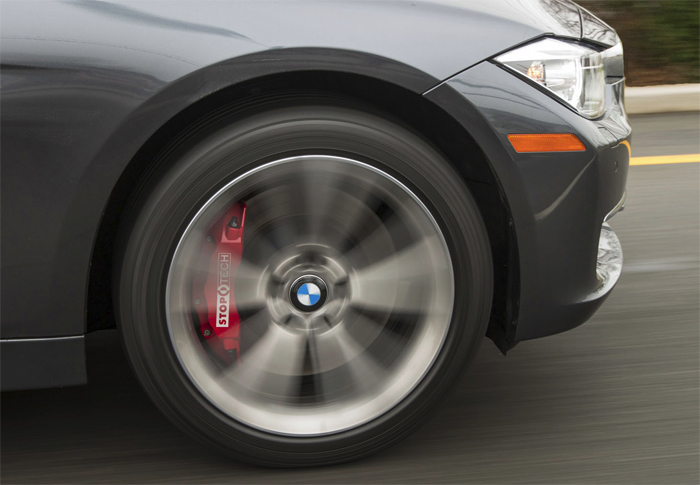
Bedding allows your brakes to reach their full potential. Until they are bedded, brakes simply do not work as well as they can. If you've installed a big brake kit, changed pads and rotors, or even purchased a new car, you should set aside time to bed the brakes per the instructions below. Proper bedding improves pedal feel, reduces or eliminates brake squeal, prevents (and often cures) brake judder, reduces brake dust, and extends the life of pads and rotors. For more details on the theory of bedding, please refer to this article: Pad and Rotor Bed-In Theory, Definitions and Procedures
Caution: Immediately after installing new pads, rotors or a big brake kit, the first few applications of the brakes will result in very little braking power. Gently use the brakes a few times at low speed to build up some grip before blasting down the road at high speed. Otherwise, you may be in for a nasty surprise the first time you hit the brakes at 60 mph.
If you just installed rotors with zinc plating or if the rotors have an anti-corrosion phosphate coating, you should postpone bedding until normal driving has allowed your pads to polish the rotors clean and removed all traces of the plating or coating. If your new brake rotors have an oily anti-corrosion coating, clean this off thoroughly with brake cleaning spray and/or hot soapy water before installation.
Read and understand these instructions completely before starting. If you have questions, give us a call or email. Do not substitute higher speeds for the 60mph called for. The heat in brakes goes up exponentially as you increase the speed from which you brake. Repeated stops from 80 or 90mph with street pads will overheat the brakes and you may end up having to replace pads and rotors.
When following these instructions, avoid other vehicles. Bedding is best done when traffic is light, as other drivers will have no idea what you are up to and may respond in a variety of ways ranging from fear to curiosity to aggression. A police officer will probably not sympathize when you try to explain why you were driving erratically! Zeckhausen Racing does not endorse speeding on public roads and takes no responsibility for injuries or tickets you may receive while following these instructions. Use common sense!
-
From 60mph, gently apply the brakes a couple times to bring them up to operating temperature. This prevents you from thermally shocking the rotors and pads in the next steps.
-
Make eight to ten near-stops from 60mph to about 20 mph. Do it HARD by pressing the brakes firmly, but do not lock the wheels or engage ABS. At the end of each slowdown, immediately accelerate back to 60mph, then apply the brakes again. DO NOT COME TO A COMPLETE STOP! If you stop completely, with your foot on the brake pedal, pad material will be imprinted onto the hot rotors, which could lead to vibration and uneven braking.
-
The brakes may begin to fade after the 7th or 8th near-stop. This fade will stabilize, but not completely go away until the brakes have fully cooled. A strong smell from the brakes, and even some smoke, is normal.
-
After the last near-stop, accelerate back up to speed and cruise for a few minutes, using the brakes as little as possible to allow them to cool down. Try not to become trapped in traffic or come to a complete stop while the brakes are still hot.
-
If full race pads, such as Hawk DTC-70 or Performance Friction PFC11 are being used, add four near-stops from 80 to 20 mph.
After the break-in cycle, there should be a slight blue tint and a light gray film on each rotor face. The blue tint tells you the rotor has reached break-in temperature and the gray film is pad material starting to transfer onto the rotor face. This is what you are looking for. The best braking occurs when there is an even layer of pad material deposited across the rotors. This minimizes squealing, increases braking torque, and maximizes pad and rotor life.
After the first break in cycle shown above, the brakes may still not be fully broken in. A second bed-in cycle, AFTER the brakes have cooled down fully from the first cycle, may be necessary before the brakes really start to perform well. This is especially true if you have installed new pads on old rotors, since the pads need some usage to conform to the rotor wear pattern. If you've just installed a big brake kit, pedal travel may not feel as firm as you expected. After the second bedding cycle, the pedal will become noticeably firmer. If necessary, bleed the brakes to improve pedal firmness.